A Scene Turns on the Information That Arrives
Learn how a scene changes direction through new information, and choose a clean way to mark the shift without adding a subplot or extra machinery.
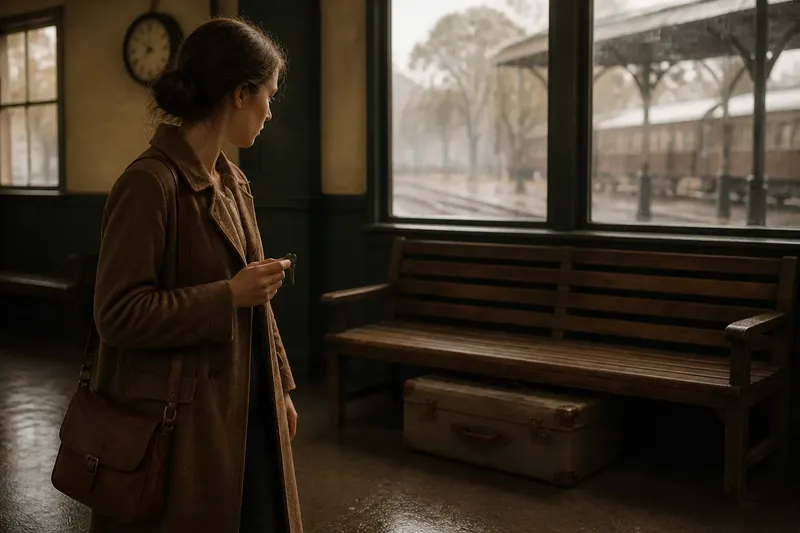
Mara reaches the station expecting to hand her brother a spare key. Then she sees his suitcase tucked beneath the bench, still zipped, and realizes he has not come to leave town after all. The scene’s direction changes because she notices something that revises her understanding of the moment. In fiction, a scene can turn on information as small as a detail, a line, or a fact arriving at the wrong time.
This kind of turn does not require a new character, a secret network, or a second plot. It asks a narrower question: what does the viewpoint character believe at the start, what information alters that belief, and what do they do next? The craft lies in making the shift legible while keeping the scene’s original purpose intact.
What changes when information arrives?
A scene turn is a change in the character’s immediate situation, intention, or understanding. New information may trigger it, but the information itself is not the turn. The turn is the response it makes possible or necessary.
For example, “the train is delayed” is a fact. If a character planned to confront someone before departure, the delay may give them time to reconsider, or remove their last chance to speak privately. The scene moves when the character revises a plan, not merely when the announcement sounds.
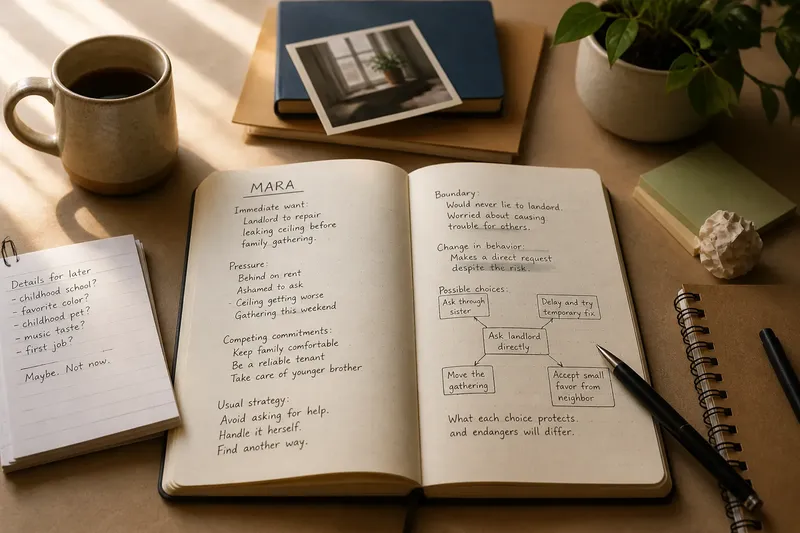
Use a simple before-and-after test. Finish these sentences in plain language:
- At the beginning, the character thinks or expects…
- After noticing or learning something, the character understands…
- Because of that, the character now wants, fears, or does…
If the last answer is unchanged, the information may be color rather than a turn. That is not automatically a flaw. A quiet scene can build atmosphere or deepen a relationship. But if the scene is meant to change direction, the new understanding should affect what happens next.
Should the turn come from a clue, a statement, or a misreading?
Three approaches work well, and each suits a different scene. Choose based on what the character can plausibly notice and what kind of pressure you want the moment to create. They are options, not a ladder of increasingly dramatic reveals.
What if the character notices a physical clue?
A visible or audible detail suits scenes where the character has a reason to observe their surroundings. A wet coat on a dry afternoon, a chair pulled away from the table, or a familiar tune coming from the wrong room can prompt a new interpretation.
Keep the clue specific enough to picture, then connect it to what the character already wants or suspects. If the detail carries no meaning for them, it will read as decoration. If it instantly explains too much, it may feel like a convenient answer key.
What if another character says something revealing?
Dialogue suits a turn that depends on conflict, persuasion, or a relationship’s unspoken rules. A character might reveal a decision indirectly, correct a small detail, or refuse to answer a question. The useful information can be less important than the way it is delivered.
Let the listener’s response show the impact. They might stop asking, change the subject, or ask a different question. A speech explaining the whole meaning often drains the exchange of tension; a restrained reaction lets the reader register the gap between what was said and what was understood.
Can a character misunderstand what they notice?
Yes, if the misreading follows from their limited knowledge, strong hopes, or fear. This approach suits scenes where the character acts on an interpretation that may later prove wrong. The scene still turns because their belief changes their behavior now.
Make the basis for the mistaken reading visible, so it feels human rather than arbitrary. The character can be wrong about what a note means while correctly recognizing that its phrasing sounds familiar. Preserve that distinction, and later correction can deepen the character rather than erase the scene.
How can the turn stay inside the existing scene?
Hold onto the scene’s original practical situation. If two people are packing a kitchen, they can discover a missing recipe card, disagree over who last used it, and change how they treat each other. The card need not lead to a hidden inheritance or an unknown visitor. Its value comes from what it reveals about this exchange.
Imagine a fictional scene in which Eli is helping his aunt clear a shelf before a move. He assumes she wants him to take an old radio because she has no use for it. As they wrap the cord, he notices that she has carefully set aside its cracked tuning dial. He asks why; she says it belonged to his late grandfather, but stops before explaining more. Eli puts the radio back on the shelf and asks her to tell him about it. The move remains the scene’s setting, while his new understanding redirects the conversation from sorting objects to sharing a memory.
Notice the compact chain: expectation, detail, interpretation, changed action. No extra subplot is required. The information matters because it changes Eli’s next choice in the scene.
A useful analogy is a lamp switch: the object stays in the same room, but what you can see changes. Treat the arriving information similarly. It should alter the meaning of what is already present, not force the story to wheel in a new room just to accommodate it.
How do you choose the right kind of turn?
Match the approach to the scene’s source of pressure. A clue works when observation is natural and the setting can carry meaning. A statement works when the relationship itself is the pressure point. A misreading works when uncertainty is part of the character’s present problem, not just a device for postponing an answer.
Then check the scene’s scale. A minor shift may be enough: a character decides not to leave, asks a more direct question, or stops treating a task as routine. If the new information seems to demand a larger plot, ask whether it can instead change the character’s immediate tactic. That keeps the scene focused without making its consequences feel trivial.
During revision, mark the exact sentence or moment when the character’s understanding changes. Then mark the first action that follows. If the two points are far apart, add a brief beat of recognition or clarify the connection. If nothing follows, decide whether the information belongs as atmosphere or needs to affect the scene’s direction.
What should you check after drafting the turn?
Use these checks to sharpen the change without building a second storyline:
- Starting expectation: Can you state what the character expects before the information arrives? If not, establish the expectation through a thought, plan, or action.
- Source: Is the clue, statement, or misreading available to the character in this moment? If not, adjust what they can observe or hear.
- Meaning: Does the character have a believable reason to interpret it this way? If the answer depends on an unstated connection, provide a small cue.
- Response: Does the information change an immediate choice, question, or tactic? If not, let it remain a detail or strengthen its effect.
- Scene boundary: Does the consequence belong to the scene’s existing situation? If it launches an unrelated problem, look for a smaller and more personal consequence.
- Reader footing: Can a reader tell what changed, even if they do not yet know the full truth? If not, clarify the character’s reaction rather than explaining every implication.
For a scene that turns on information, the strongest revision is often a small one: make the character’s prior expectation clearer, bring the noticed detail into focus, or give the new understanding a visible consequence. The reader does not need a larger mystery to feel the direction change; they need to see what the character now believes, and what that belief makes them do.